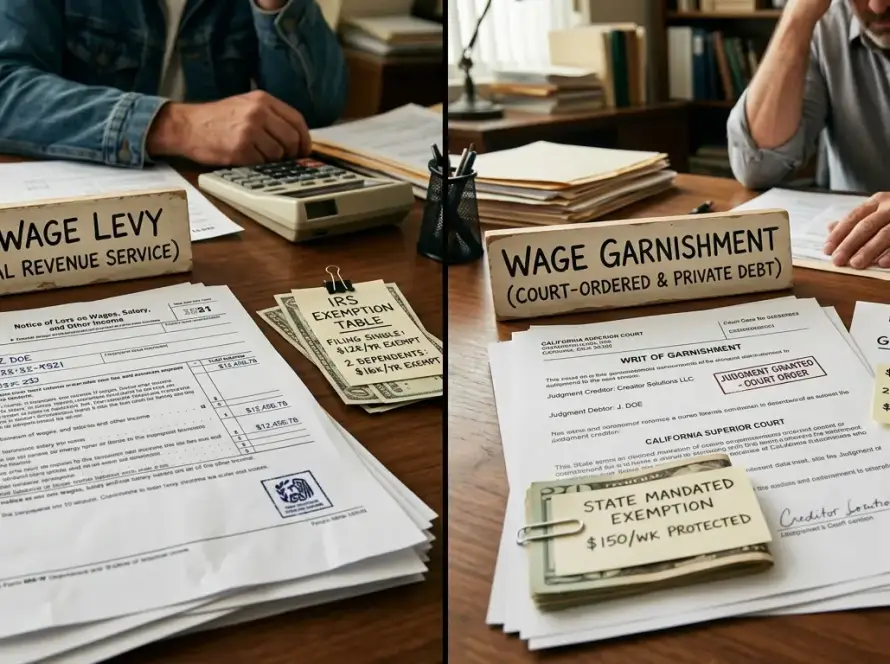
There is a misconception among the people that the IRS can take money from their paycheck without warning. However, federal law actually requires the agency to send multiple notices first, which must be sent before any wage garnishment begins.
Your employer will only be ordered to withhold your wages after specific legal steps are completed. Once you know what those letters mean, protecting your income becomes far more straightforward. So you must work to stop IRS wage garnishment before your employer ever gets involved.
An essential part of understanding the IRS process is to recognize the difference between a routine balance reminder and a legally binding warning. The goal is not to scare you but to help you respond appropriately, thereby avoiding the shock of a reduced paycheck. With the right information at hand, those multiple notices become an opportunity rather than a source of panic.
What Is IRS Wage Garnishment?
Wage garnishment is the process by which the IRS orders your employer to send a portion of your paycheck directly to the government without any judge needing to sign off on this action.
An irs levy on wages leaves your employer with no choice but to comply, and ignoring that notice carries serious consequences. Should your boss refuse to cooperate, the law holds that the employer is personally responsible for the full amount demanded plus an extra penalty equal to half of that total.
How Does the IRS Start Wage Garnishment?
The process follows a predictable legal timeline, beginning only after the taxpayer misses a payment deadline without making other arrangements.
Tax Debt Goes Unpaid
Once money is owed to the IRS and the due date passes with no payment or response, the agency determines that collection action may become necessary. This unpaid balance triggers everything which follows.
IRS Sends Collection Notices
A bill arrives first, then come reminder letters spaced roughly eight weeks apart. Each notice becomes more urgent than the last. An IRS wage garnishment notice formally enters the mail at this stage in the sequence.
The IRS sends these to the last address they have on file, which is why keeping your mailing address updated matters so much.
Final Notice of Intent to Levy
This letter arrives by certified mail, meaning the IRS requires a signature to confirm delivery. It gives the taxpayer 30 days from the mailing date to either pay the debt or request a hearing known as a Collection Due Process hearing.
To stop IRS levy, responding within that 30‑day window is the single most important step a person can take. After this window closes, the IRS no longer needs to provide any additional warnings. The agency has already satisfied its legal obligation.
Wage Levy Begins
If those 30 days pass without action, the IRS sends Form 668‑W to the employer. This form instructs the employer exactly how much to withhold from the employee’s paycheck. Withholding can begin almost immediately after this form is sent.
Warning Signs That Wage Garnishment May Be Coming
The IRS provides several clear signals before taking money from a paycheck. When you are prepared at recognizing these signs early, it makes prevention far more realistic.
Multiple IRS Notices Arriving
Receiving a single bill is not a problem. However, receiving a bill followed by reminder letters every eight weeks suggests that collection efforts are moving forward. To garnish wages, the IRS must issue a specific ‘Red Line’ notice such as the CP90, CP297, or LT11, which officially grants you Collection Due Process (CDP) rights.
Penalties and Interest Keep Growing
The balance does not stay still, nor does the IRS simply wait. As weeks pass without payment, penalties and interest accumulate steadily. These additions can increase the original tax bill by a significant amount over time, turning a manageable debt into an amount far worse to manage.
Language About Levy or Seizure Appears
Notices eventually begin using stronger language. When the words “levy” or “seizure” appear, the process has entered a more serious phase. Levy refers to taking wages while seizure means taking a hold of other property such as bank accounts or vehicles.
You Receive a Final Warning Letter
The LT11 or Letter 1058 is sent as the last notice before action is taken. It states clearly that the IRS intends to levy wages while providing only 30 days to respond. This letter comes by certified mail. Making the mistake of ignoring this mail from the IRS means forfeiting the only statutory window to stop the levy before it begins.
How to Stop IRS Wage Garnishment Before It Starts
Taking action early makes a significant difference. The law provides a number of paths to prevent wage garnishment with each one suited to different financial situations.
Respond to IRS Notices Immediately
Once you submit a request for a payment agreement using the proper form, the IRS generally cannot start taking your wages while that request remains under review.
This protection is automatic during the review period, so that it buys you valuable time. Do not wait for a final notice to arrive before acting, or you may lose that window or you could find yourself asking your employer why your paycheck suddenly shrank.
File Missing Tax Returns
The IRS will not consider any collection alternative if past returns remain unfiled, meaning you cannot ask for help until you have filed these taxes. Completing those missing documents is not optional. You will need to submit them before the agency will discuss payment plans, hardship status, or any other relief option.
Request an Installment Agreement
A monthly payment plan allows you to pay down the balance over time. There are streamlined agreements available for amounts up to $50,000 for long-term plans (up to 72 months).
For taxpayers owing less than $100,000, the IRS now offers short-term payment plans that provide up to 180 days to pay the balance in full. How to stop IRS wage garnishment often begins with this simple step. This equals six years of manageable monthly payments, a timeframe you can probably handle without drastic changes to your lifestyle.
Explore Offer in Compromise
Settling the debt for less than you owe is possible in certain situations. This is called an offer in compromise that requires an application fee and an initial payment.
You may qualify for waivers if your income is low enough, meaning you might not need to pay that fee at all. For help with back taxes, you need to explore whether this option fits your circumstances.
Request Hardship Status
When your basic living expenses exceed your income, you can ask the IRS to place your account on hold. This Currently Not Collectible status stops wage garnishment as the agency agrees that forcing payment would cause economic harm.
Consider your rent, food, and utilities. If those take up your entire paycheck, the IRS will step back rather than push forward. The agency must release an active levy once you properly document your hardship, yet many taxpayers never realize this option exists for them.
Get Professional Tax Representation
Seeking irs wage garnishment help early increases your chances of a favorable outcome, especially when professional representation matters most. A licensed enrolled tax agent or reputable accountant knows how to file the right forms and communicate with the IRS effectively.
What Happens If You Ignore IRS Wage Garnishment Notices?
Many taxpayers do not realize the consequences that come with ignoring IRS notices:
Other assets remain at risk. Collection efforts do not stop with just your wages, so other assets remain at risk as well.
Your debt keeps growing. Penalties and interest continue accumulating on your original balance
You lose your right to fight back. You surrender your right to appeal or request a hearing, which is your only opportunity to speak up before the IRS moves forward.
The problem gets harder to solve. Once the levy starts, stopping it becomes harder and more urgent.
When Should You Contact a Tax Resolution Specialist?
You should contact a professional the moment a final levy notice arrives in your mailbox or when you are uncertain which option works best for your situation.
A tax resolution specialist may be an enrolled agent, a CPA, or a tax attorney, each one authorized to represent you and communicate with the IRS on your behalf, so look into professional tax resolution services for meaningful support.
Securing Your Paycheck Before the IRS Steps In
The gap between a warning letter and a reduced paycheck is smaller than most people think, but taking early action can stop wage garnishment before it ever starts. There are several options that exist to secure your paycheck from IRS wage garnishment.
Each option requires you to respond before the final deadline passes, otherwise the IRS will proceed without receiving any input from you. You can accomplish this by working with a tax professional that can guide you toward the appropriate path and help you avoid costly mistakes.
Frequently Asked Questions
Can the IRS take my wages without sending any notice first?
No, federal law requires advance warning, so the IRS must mail you a written notice of its intent to levy before any wage withholding begins. This notice must give you 30 days to respond, meaning you will always see it coming if you open your mail.
How many notices does the IRS typically send?
A sequence of notices goes out before wage garnishment starts. But the most critical is the Final Notice of Intent to Levy and Notice of Your Right to a Hearing.
What does the final warning look like?
The last notice arrives to give a 30-day warning. Once that 30‑day window closes, the IRS can begin garnishing your paycheck without sending you any additional letters.